
When people think about building a website, they usually focus on the business name first. But your domain extension, the part that comes after the dot, plays just as big a role in how your brand is perceived, trusted, and discovered online.
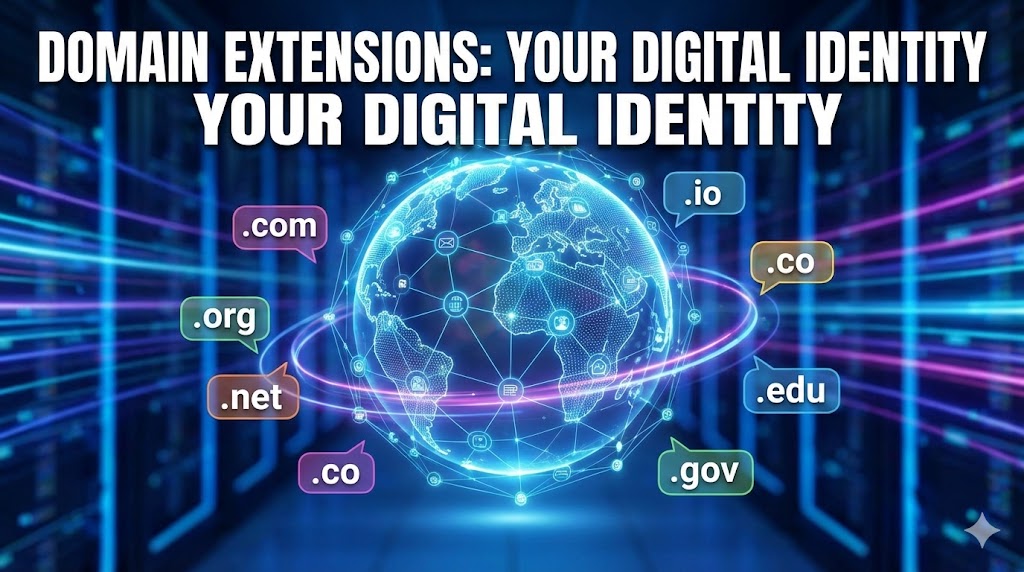
Domain extensions, also known as Top-Level Domains (TLDs), are the suffixes at the end of web addresses such as .com, .ng, .org, or .shop. They help signal what your website is about, who it’s for, and sometimes where it’s located.
In this guide, you’ll learn what domain extensions are, the different types available today, and how to choose the best one for your business in 2026, especially if you’re building in Nigeria or across Africa.
According to ICANN, which oversees the global Domain Name System, are a core part of how the internet is organized and how users navigate trusted websites.
- What Are Domain Extensions?
- Why Domain Extensions Matter More in 2026
- Common Domain Extensions (TLDs)
- Other Popular and Niche Domain Extensions
- Types of Domain Extensions
- How Domain Extensions Affect SEO
- How Domain Extensions Affect Trust and Branding
- How to Choose the Best Domain Extension for Your Business
- Should You Register More Than One Domain Extension?
- Domain Extensions vs Domain Names: What’s the Difference?
- Choosing the Right Domain Extension in 2026
What Are Domain Extensions?
A domain extension is the ending of your domain name, the letters that come after the final dot.
For example:
-
leanna.ng→.ngis the extension -
google.com→.comis the extension -
charity.org→.orgis the extension
While your domain name represents your brand, your extension communicates context, whether your site is commercial, nonprofit, regional, or niche-focused.
In today’s digital landscape, domain extensions are no longer just technical labels. They influence:
-
Brand credibility
-
User trust
-
Search relevance
-
Memorability
-
Click-through rates
That’s why choosing the right domain extension is now a business decision, not just a technical one.
Why Domain Extensions Matter More in 2026
In earlier years, most businesses defaulted to .com without much thought. But today, thousands of domain exist, and users are far more comfortable clicking alternatives like .shop, .ai, .ng, and .africa.
Here’s why extensions matter more than ever:
1. Credibility
Well-known extensions like .com, .org, and country domains like .ng signal legitimacy and reduce hesitation when people first see your website.
2. Branding
Your extension can reinforce what you do — for example, .shop for e-commerce or .tech for startups.
3. Availability
With many .com names already taken, newer extensions give businesses more naming flexibility.
4. Market Positioning
Country-code extensions like .ng or regional ones like .africa instantly signal who your business serves.
In competitive markets, these signals can influence whether someone clicks your site or scrolls past it.
Common Domain Extensions (TLDs)
Some domain extensions have been around since the early days of the internet and remain the most widely recognized today.
.com
Originally meant for commercial businesses, .com is now the most popular domain extension globally and works for almost any type of website. You can search and register your .COM domain directly through Leanna.
.net
Initially designed for network-related organizations, .net is now widely used by tech companies, SaaS platforms, and online services.
.org
Commonly associated with nonprofits, NGOs, schools, and community organizations, though it’s not legally restricted in most countries.
.info
Often used for informational or educational websites, blogs, and knowledge platforms.
.edu
Restricted to accredited educational institutions, mainly in the United States.
.gov
Reserved strictly for government entities and agencies.
These traditional domain extensions are still powerful, especially when trust and authority matter most.
Other Popular and Niche Domain Extensions
As the internet expanded, newer domain extensions were introduced to serve specific industries, communities, and branding needs.
Some popular examples include:
.co
A shorter alternative to .com, often used by startups and modern brands.
.io
Favored in the tech and startup ecosystem, especially for SaaS products and developer tools.
.ai
Highly popular among artificial intelligence startups and tech companies.
.shop
Ideal for e-commerce stores and online retailers.
.xyz
A flexible, generic extension used by startups and creative brands.
These niche domain extensions allow businesses to align their web identity more closely with their industry or personality, especially when their ideal .com name is unavailable.
Types of Domain Extensions
All domain extensions fall into three main categories:
1. Generic Top-Level Domains (gTLDs)
These are not tied to any country and are open for general use.
Examples include:
-
.com -
.net -
.org -
.info -
.xyz -
.shop
They’re ideal for global businesses, online platforms, and brands that don’t want geographic limitations.
2. Country Code Top-Level Domains (ccTLDs)
These represent specific countries or territories and usually consist of two letters.
Examples include:
-
.ng— Nigeria -
.uk— United Kingdom -
.us— United States -
.ca— Canada
For Nigerian businesses, registering a .NG domain builds instant local trust and improves relevance for Nigerian audiences.
ccTLDs are especially powerful for:
-
Local businesses
-
National brands
-
Region-focused services
-
Organizations serving a specific country
3. Sponsored Top-Level Domains (sTLDs)
These are restricted to specific communities, industries, or institutions and often require eligibility verification.
Examples include:
-
.gov— government agencies -
.edu— accredited educational institutions -
.mil— military organizations
These extensions carry strong credibility but are not available to the general public.
How Domain Extensions Affect SEO
Search engines do not rank websites higher solely because of their domain extension. However, domain extensions influence SEO indirectly through trust signals, geographic relevance, and user behavior.
According to Google Search Central, location context and user intent play a role in how search results are served, which is why country-code extensions like .ng often perform better in local Nigerian search results.
Here’s how domain extensions affect SEO in practice:
-
.nghelps Nigerian businesses rank more easily for local searches. -
.comsupports global visibility and international reach. -
Niche extensions like
.shopor.aican improve click-through rates by matching user intent.
The best SEO performance comes from pairing the right domain extension with strong content, fast hosting, and good technical optimization, not from the extension alone.
How Domain Extensions Affect Trust and Branding
When someone sees your website for the first time, they make a judgment in seconds, often before reading a single word.
Your domain extension contributes to that impression.
-
.comfeels established, mainstream, and global. -
.ngfeels local, authentic, and market-relevant. -
.orgfeels mission-driven and community-focused. -
.shopfeels transactional and commerce-ready.
Choosing the right domain extension helps align your brand identity with customer expectations, which increases confidence and conversion rates.
How to Choose the Best Domain Extension for Your Business
Choosing the right domain extension isn’t about what’s “most popular”, it’s about what fits your business goals.
Here’s a simple framework:
Choose .com if:
-
You want international reach
-
You’re building a global brand
-
You want maximum recognition
Choose .ng if:
-
Your audience is primarily Nigerian
-
You want stronger local trust
-
You’re serving Nigerian customers or institutions
Choose niche extensions (.shop, .ai, .tech) if:
-
Your business fits a specific industry
-
Your
.comname is unavailable -
You want a more distinctive brand identity
Many serious businesses register multiple domain extensions and redirect them to one main website to protect their brand and expand reach. You can explore this through Leanna’s domain services.
Should You Register More Than One Domain Extension?
Yes and here’s why.
Registering multiple domain extensions helps you:
-
Prevent competitors from using your brand name
-
Capture traffic from different domain types
-
Protect your business identity long-term
-
Expand into new markets more easily
For example, a Nigerian business might register:
-
brandname.ng -
brandname.com -
brandname.africa
Then redirect all traffic to one main website.
This strategy is especially useful for startups, e-commerce brands, fintech platforms, and companies planning future growth.
Domain Extensions vs Domain Names: What’s the Difference?
A domain name is your unique brand identity (for example, leanna), while the domain extension is the ending (.ng, .com, etc.).
Together, they form your full domain:
-
leanna.ng -
leanna.com -
leanna.africa
Both matter but your extension shapes how your brand is positioned, perceived, and discovered.
Choosing the Right Domain Extension in 2026
Domain extensions are no longer just technical details they are strategic business assets.
The right domain extension can:
-
Build trust faster
-
Improve relevance
-
Strengthen branding
-
Increase memorability
-
Support long-term growth
Whether you choose .com, .ng, or a niche extension, what matters most is alignment with your audience, goals, and future plans.
If you’re still setting up your online presence, start with our guide on how to get a business online in Nigeria in 2026.
And when you’re ready to register, you can search and secure your domain directly through Leanna.