
- Why Most Business Websites in Nigeria Fail (And How to Fix Them Before Losing Customers)
- The Real Reason Why Most Business Websites in Nigeria Fail
- Nigerian Businesses Are Losing Customers Faster Than They Think
- Why Beautiful Websites Still Fail
- Most Nigerian Business Websites Have a Messaging Problem
- Why SEO Is Quietly Killing Many Websites
- The Mobile Experience Is Worse Than Most Businesses Realize
- Why Cheap Websites Usually Become Expensive Later
- What High-Performing Websites Actually Do Differently
- Clear Positioning
- Strong Information Hierarchy
- Conversion-Focused Structure
- SEO + AEO Optimization
- Fast Performance
- Consistent Trust Signals
- What Smart Nigerian Businesses Are Starting To Realize
- What These Website Failures Are Really Costing Businesses
- In Conclusion
- If You’re Ready to Fix It Properly
- FAQs On why most business websites in Nigeria fail
Why Most Business Websites in Nigeria Fail (And How to Fix Them Before Losing Customers)
A lot of Nigerian businesses think they have a traffic problem.
They don’t.
What they actually have is a website performance problem.
Because the painful truth is this:
Most business websites in Nigeria are not built to generate trust, visibility, or conversions. They are built simply to “exist.”
And in 2026, that no longer works.
Today, customers judge businesses online in seconds. Before they call, send a WhatsApp message, or make a payment, they’ve already formed an opinion based on your website.
If the experience feels slow, confusing, outdated, or unclear, they leave.
Quietly.
Without complaints.
Without feedback.
And most businesses never realize how many customers they’re losing because of it.
According to Google’s guidance on user-first websites, sites that are structured for clarity, speed, and intent perform better in search visibility and user engagement.
That’s why this conversation matters.
Not because websites are “important.”
But because websites now influence:
- whether customers trust you
- whether Google ranks you
- whether AI search systems reference your business
- and whether visitors become paying customers
And right now, many Nigerian business websites are failing at all four.
The Real Reason Why Most Business Websites in Nigeria Fail
Most websites don’t fail because of color choices.
They fail because there is no strategic thinking behind them.
The business owner wants something “clean.” The designer wants something “fine.” The developer wants to finish quickly.
But nobody stops to ask:
- What is this website supposed to achieve?
- What should visitors do here?
- Why should customers trust this business?
- What problem is this website solving?
So the website goes live looking decent…
…but commercially dead.
That’s why many businesses experience this pattern:
- people visit the website
- scroll briefly
- then disappear without taking action
No calls. No inquiries. No leads.
Just traffic without results.
And according to conversion-focused web studies, this is now one of the biggest reasons modern business websites underperform globally.
Nigerian Businesses Are Losing Customers Faster Than They Think
This issue is even more serious in Nigeria because user behavior has changed dramatically over the last few years.
Customers are more digitally aware now.
People compare businesses online before making decisions.
A potential customer searching for:
- hospital in Lagos
- real estate company in Abuja
- best salon in Port Harcourt
- logistics company in Nigeria
is already judging credibility based on digital experience.
And the problem is:
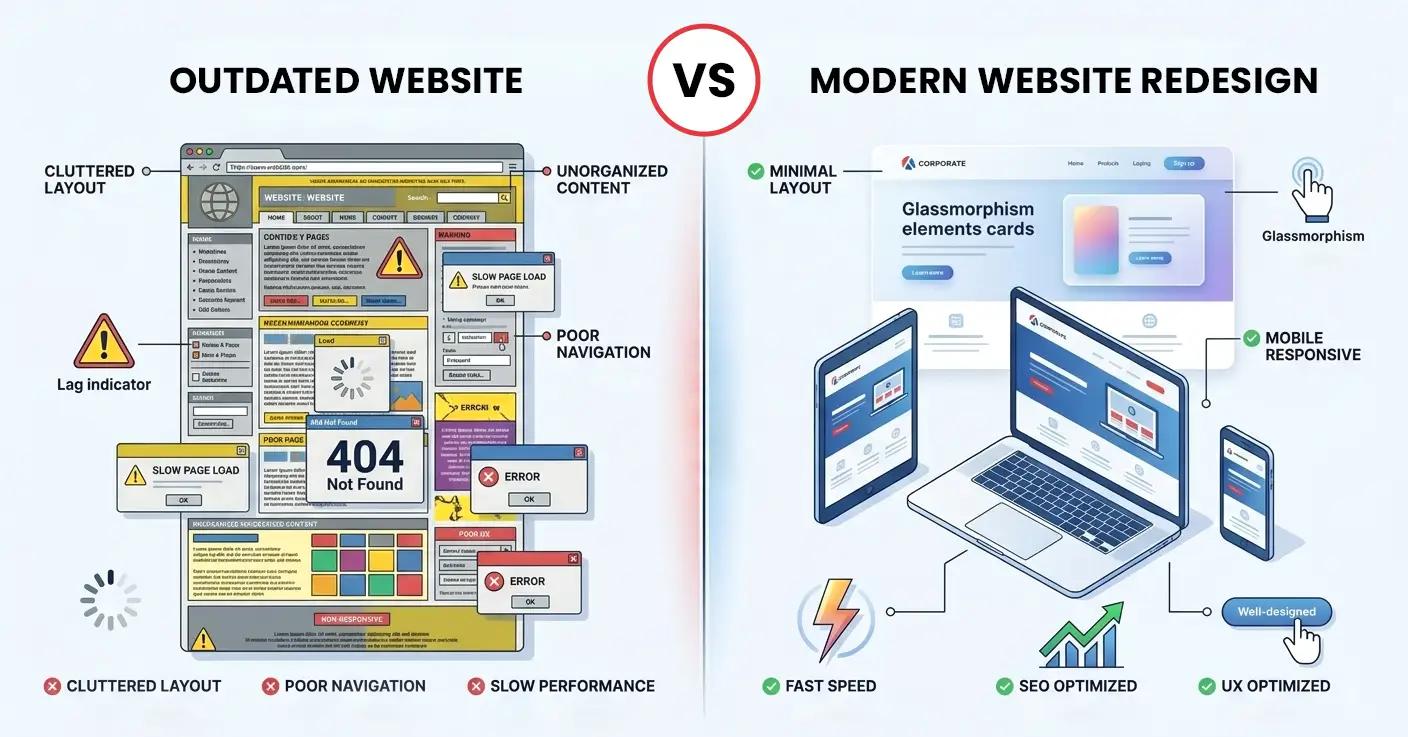
many Nigerian business websites still operate like it’s 2018.
- Slow pages.
- Broken layouts.
- Tiny text.
- Confusing navigation.
- Poor mobile experience.
- No trust signals.
- No SEO structure.
Meanwhile, customer expectations have moved ahead.
Research consistently shows that users abandon confusing websites quickly, especially on mobile devices where usability and speed strongly affect trust and conversions.
Check out: Nielsen Norman Group
Why Beautiful Websites Still Fail
This is where many businesses misunderstand the problem.
A website can look beautiful and still fail completely.
Because aesthetics alone do not create conversions.
Clarity does.
Structure does.
Trust does.
Speed does.
Positioning does.
Most failed websites share the same hidden problems:
- unclear messaging
- weak value proposition
- poor conversion flow
- no SEO structure
- no audience targeting
- no trust-building elements
That’s why some businesses spend heavily on “premium design” and still struggle to generate leads.
This is a core example of why most business websites in Nigeria fail even when the design looks good.
The website looks impressive.
But visitors still don’t know:
- what the business actually does
- who it helps
- why it’s different
- or what they should do next
And once confusion enters the experience, conversion drops immediately.
As multiple conversion-focused studies explain, unclear positioning and weak page hierarchy are among the biggest reasons websites fail to convert visitors into customers.
Most Nigerian Business Websites Have a Messaging Problem
This is the part almost nobody talks about.
Many websites are written from the company’s perspective instead of the customer’s perspective.
You’ll see headlines like:
“Welcome to Our Official Website”
Or:
“We Are Passionate About Excellence”
But the customer is thinking:
“How does this help me?”
That disconnect quietly destroys conversions.
Because modern users scan websites extremely fast.
If they cannot immediately understand:
- what you offer
- who it’s for
- and why they should care
they leave.
And Google notices that behavior too.
High bounce rates, low engagement, and poor interaction signals all affect long-term visibility.
That’s why strong websites today are built around search intent and behavioral psychology, not generic corporate language.
Why SEO Is Quietly Killing Many Websites
A shocking number of Nigerian business websites are invisible on Google.
Not because Google is unfair.
But because the websites were never structured for search visibility from the beginning.
Most websites fail basic SEO fundamentals like:
- poor heading hierarchy
- weak keyword targeting
- slow page speed
- missing internal linking
- poor mobile optimization
- weak metadata
- no search intent mapping
And now there’s another layer:
AEO — Answer Engine Optimization.
Modern AI systems no longer rank content the same way traditional search engines do.
AI search platforms now prioritize:
- structured answers
- topical authority
- contextual clarity
- semantic relevance
- trustworthy entities
That means businesses using outdated SEO practices are becoming less visible across both Google Search and AI-driven discovery systems.
This is one reason many websites get indexed but never generate meaningful traffic.
If you want to understand this deeper, read: Website Design Cost in Nigeria (what businesses are actually paying for)
The Mobile Experience Is Worse Than Most Businesses Realize
In Nigeria, most users access websites through mobile devices.
Yet many websites are still designed primarily for desktop screens.
That creates friction immediately.
- small text
- hard-to-click buttons
- slow loading pages
- cluttered layouts
And once friction increases, users leave immediately.
This directly affects:
- conversions
- trust
- search rankings
- and customer retention
Google’s ranking systems now heavily prioritize mobile usability and Core Web Vitals because user experience strongly impacts engagement and search performance.
Why Cheap Websites Usually Become Expensive Later
This is another hard truth businesses eventually learn.
Cheap websites often create expensive problems later.
At first, the low price feels attractive.
But after launch, reality starts showing up:
- the site loads slowly
- SEO doesn’t work
- pages break
- visitors don’t convert
- redesign becomes necessary
And eventually the business pays twice.
Sometimes three times.
Because the original website was never built properly.
That’s why experienced businesses now focus less on “cheap web design” and more on long-term performance.
What High-Performing Websites Actually Do Differently
The best business websites are not random collections of pages.
They are intentional systems.
Everything is designed around:
- user behavior
- trust psychology
- conversion flow
- search visibility
- and customer decision-making
That’s why strong websites usually have:
Clear Positioning
Visitors immediately understand:
- what the business does
- who it serves
- and what makes it different
Strong Information Hierarchy
The website guides attention naturally instead of overwhelming users.
Conversion-Focused Structure
Every section moves users closer to action.
SEO + AEO Optimization
The site is structured for both search engines and AI systems.
Fast Performance
Because speed directly affects trust and rankings.
Consistent Trust Signals
Testimonials. Proof. Case studies. Professional branding. Clear messaging.
All of these reduce hesitation.
What Smart Nigerian Businesses Are Starting To Realize
More businesses are beginning to understand something important:
A website is no longer just a digital brochure.
It is part of your sales infrastructure.
And when it underperforms, the business loses money quietly every single day.
That’s why businesses are becoming more intentional about:
- website strategy
- conversion optimization
- SEO structure
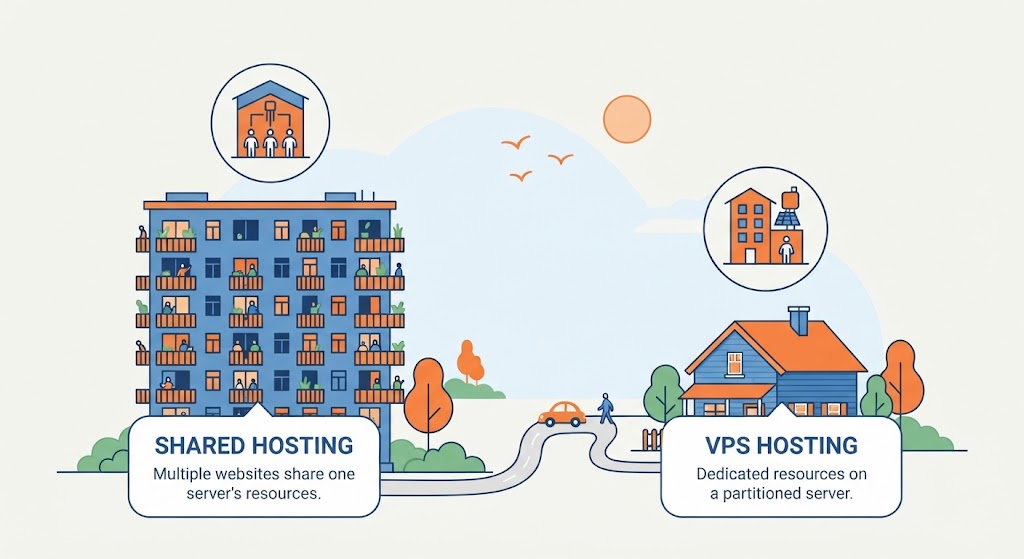
- hosting quality
- performance systems
- and long-term scalability
Because the difference between a website that “exists” and one that generates business is massive.
What These Website Failures Are Really Costing Businesses
Most business owners don’t notice website problems immediately.
The impact is usually silent.
No alerts. No notifications. No clear warning signs.
Just slowly declining results over time.
Here’s what typically happens when a website is not performing properly:
- Traffic comes in, but does not convert into inquiries
- Potential customers visit once and never return
- Paid ads become more expensive because landing pages don’t convert
- Google rankings stay stagnant despite effort
- Competitors with better websites start taking market share
In most cases, the business assumes the problem is marketing.
But the real issue is conversion infrastructure.
A weak website doesn’t just “look bad” it reduces the effectiveness of everything else:
SEO becomes less impactful
Social media traffic doesn’t convert
Referrals lose credibility impact
Advertising return on investment drops
Over time, this creates a gap between effort and results.
And that gap is where businesses quietly lose revenue.
In Conclusion
Understanding why most business websites in Nigeria fail is the first step to fixing them and improving performance.A business website is no longer just a digital presence.
It is a decision-making system that either helps customers trust you faster… or pushes them away silently.
And in most cases, the difference is not the business itself, it’s the structure behind the website.
If your website is not generating inquiries, conversions, or visibility, the issue is rarely random.
It is usually fixable.
If You’re Ready to Fix It Properly
The next step is simply making sure your website is built the right way from the start.
If your website is already showing these signs, low traffic, no inquiries, or poor engagement, the issue is rarely visibility. It is structure.
At this point, fixing it requires more than design changes. It requires a system built around clarity, SEO, user behavior, and conversion flow.
Explore how we structure high-performing business websites → Leanna Solutions Website Services
FAQs On why most business websites in Nigeria fail
1) Why do most business websites in Nigeria fail?
Most fail because of poor SEO, weak messaging, slow performance, poor mobile experience, and lack of conversion strategy.
2) Why is my website not getting customers?
Your website may have issues with clarity, trust signals, user experience, search visibility, or conversion flow.
3) Does website speed affect SEO?
Yes. Website speed directly affects user experience, bounce rates, Core Web Vitals, and Google rankings.
4) What makes a website convert visitors into customers?
Clear messaging, strong UX, fast performance, SEO optimization, trust signals, and strategic calls-to-action all improve conversions.
5) Can a beautiful website still fail?
Yes. A visually attractive website can still fail if it lacks clarity, structure, performance, and conversion-focused strategy.