
Choosing a web hosting provider is one of the most important decisions you’ll make for your website. The wrong choice can lead to slow loading speeds, frequent downtime, poor security, and lost customers. On the other hand, the right hosting gives your website the speed, reliability, and performance it needs to grow.
If you’re wondering how to choose the right web hosting, you’re not alone. With hundreds of hosting providers and dozens of plans available, it’s easy to pay for features you don’t need or choose a service that can’t support your business.
This guide explains how to choose the right web hosting without wasting money. You’ll learn what really matters, the mistakes to avoid, and how to choose a hosting plan that fits your website today and as it grows.
Key Points
- Choose hosting based on your website’s needs, not the lowest price.
- Look for speed, uptime, security, scalability, and customer support.
- Understand the differences between shared, VPS, cloud, and dedicated hosting.
- A reliable hosting provider helps improve website performance, SEO, and user experience.
Why Choosing the Right Web Hosting Matters
Your hosting provider stores your website files and delivers them to visitors whenever someone types your domain name into a browser.
If your hosting is unreliable, your website may load slowly, go offline unexpectedly, or struggle during periods of high traffic. These issues can affect your search engine rankings, reduce customer trust, and cost you sales.
Learning how to choose the right web hosting helps you avoid these problems before they happen.
A good hosting provider should offer:
- Fast website performance
- High uptime
- Strong security
- Reliable backups
- Easy scalability
- Responsive customer support
Choosing quality hosting from the beginning is often cheaper than fixing problems later.
7 Things to Check Before Buying Web Hosting
1. Website Speed
Visitors expect websites to load quickly.
Choose a hosting provider that uses SSD or NVMe storage, modern servers, and performance optimization technologies.
A fast hosting environment improves user experience and supports better SEO.
Related: Read our guide on Why Your Website Is Slow to understand how hosting affects performance.
2. Uptime Guarantee
Downtime means lost visitors and missed business opportunities.
Look for providers offering at least 99.9% uptime backed by reliable infrastructure.
Frequent downtime can negatively affect both customer confidence and search visibility.
3. Security Features
Website security should never be optional.
Your hosting plan should include:
- Free SSL certificate
- Firewall protection
- Malware scanning
- Automatic backups
- DDoS protection
A secure website protects both your business and your customers.
For more information on website security, firewalls, and DDoS protection, explore the Cloudflare Learning Center.
Related: Learn Why Your Website Needs an SSL Certificate and how it protects your website.
4. Customer Support
Technical issues can happen at any time.
Choose a hosting provider with knowledgeable support available through live chat, email, or phone.
Quick support often makes the difference between a small inconvenience and hours of downtime.
5. Scalability
Your website may start small, but it should be able to grow.
A good hosting provider allows you to upgrade your resources without moving your website to another platform.
This saves time and prevents unnecessary interruptions as your business expands.
6. Backups and Recovery
Unexpected problems happen.
Automatic backups ensure your website can be restored if something goes wrong.
Before buying hosting, check:
- Backup frequency
- Backup retention
- Restoration process
- Additional recovery costs
Reliable backups provide peace of mind.
7. Pricing and Value
The cheapest hosting isn’t always the best value.
Instead of focusing only on price, compare what each hosting plan includes.
Consider:
- Storage
- Bandwidth
- Email accounts
- Free domain
- SSL certificate
- Performance features
- Renewal pricing
Understanding how to choose the right web hosting means evaluating long-term value rather than simply choosing the lowest monthly cost.
Common Web Hosting Mistakes
Many businesses make the same mistakes when choosing hosting.
Avoid these common errors:
Choosing the Cheapest Plan
Low-cost hosting may come with slower servers, limited resources, or poor customer support.
Ignoring Renewal Costs
Many providers offer attractive introductory prices that increase significantly after the first term.
Always check renewal pricing before purchasing.
Buying Features You Don’t Need
Not every website requires dedicated hosting or advanced enterprise features.
Choose a hosting plan that matches your current needs while allowing room for growth.
Overlooking Security
Security should be included from day one.
Ensure your hosting provider offers SSL certificates, backups, malware protection, and regular updates.
Which Type of Hosting Is Right for You?
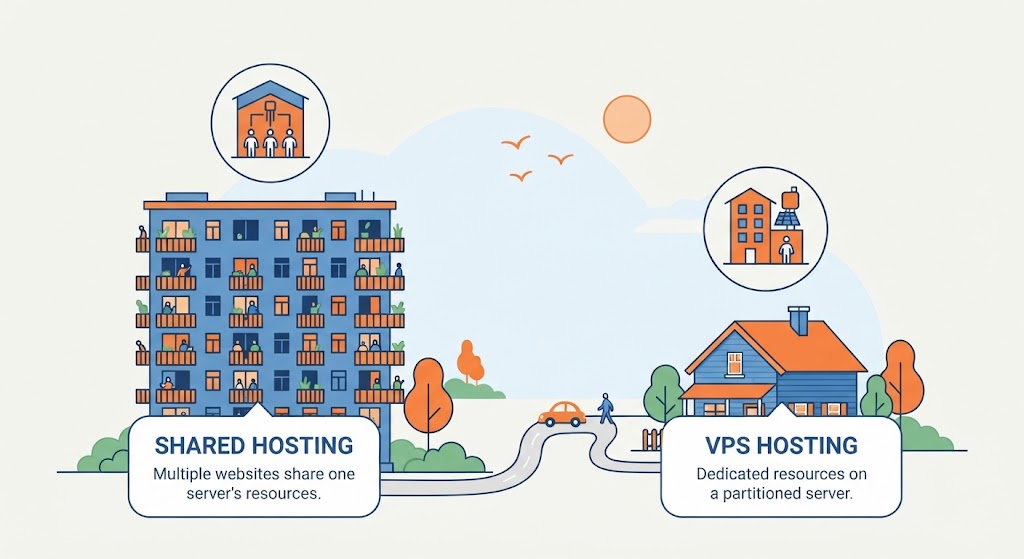
Shared Hosting
Best for:
- Personal websites
- Small business websites
- Blogs
- New businesses
Affordable and easy to manage.
VPS Hosting
Best for:
- Growing businesses
- Medium-sized websites
- Higher traffic websites
Provides more resources and better performance than shared hosting.
Cloud Hosting
Best for:
- Businesses expecting growth
- E-commerce stores
- High-traffic websites
Offers flexibility, scalability, and improved reliability.
Dedicated Hosting
Best for:
- Large enterprises
- Resource-intensive applications
- Websites with extremely high traffic
Provides maximum performance and complete server control.
Final Checklist Before You Buy
Before purchasing any hosting plan, ask yourself:
✅ Does it provide reliable performance?
✅ Does it include SSL?
✅ Are automatic backups available?
✅ Can I upgrade later?
✅ Is customer support responsive?
✅ Does the price provide long-term value?
If you can confidently answer “yes” to these questions, you’re likely making a smart hosting decision.
Conclusion
Learning how to choose the right web hosting isn’t about finding the cheapest provider, it’s about finding the best fit for your website.
Reliable hosting improves speed, strengthens security, reduces downtime, and creates a better experience for your visitors. It also gives your business a solid foundation for future growth.
Take time to compare your options carefully and choose a hosting solution that supports your goals today and tomorrow.
Ready to Choose the Right Hosting?
At Leanna, we provide reliable web hosting designed for businesses that value speed, security, and performance. Whether you’re launching your first website or upgrading from another provider, our hosting solutions are built to help your website grow with confidence.
Explore Leanna’s web hosting solutions today and build your website on a strong foundation.
Frequently Asked Questions
What is the most important factor when choosing web hosting?
Performance, uptime, security, scalability, and customer support are the most important factors to consider.
Is shared hosting good for small businesses?
Yes. Shared hosting is suitable for most small business websites and blogs with moderate traffic.
Does web hosting affect SEO?
Yes. Website speed, uptime, and security all influence user experience, which can affect search engine performance.
Can I change my hosting provider later?
Yes. Most websites can be migrated to another hosting provider if your current plan no longer meets your needs.
How much should I spend on web hosting?
Choose a hosting plan that matches your website’s requirements rather than simply selecting the cheapest option. Good hosting is an investment in your website’s performance and reliability.