
Introduction
Choosing the best web host is one of the most important decisions you will make for your online business.
And yet, most people get it wrong.
They choose based on price, flashy offers, or recommendations without fully understanding what they actually need.
At first, everything seems fine.
Then reality hits:
- your website becomes slow
- it goes offline unexpectedly
- customers leave before pages load
- your SEO rankings drop
In 2026, knowing how to choose a web host is no longer optional.
It is a business-critical decision that directly affects your growth, visibility, and revenue.
What Is Web Hosting and Why It Matters
Web hosting is the service that stores your website and makes it accessible online.
But beyond that, your hosting provider controls:
- website speed
- uptime (availability)
- security
- scalability
According to Google’s SEO guidelines
Speed and reliability directly affect your rankings.
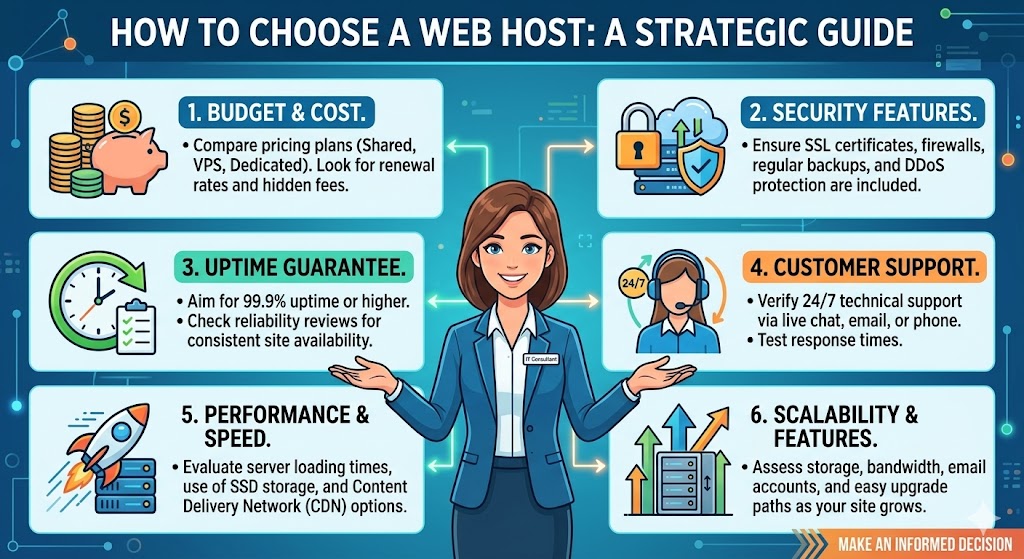
How to Choose A Web Host (Step-by-Step)
If you want to choose the right hosting for your business, focus on what actually matters.
1. Uptime (Your Website Must Stay Online)
Uptime is the percentage of time your website is accessible.
Always choose 99.9% uptime or higher
Anything less leads to:
- lost sales
- poor user experience
- damaged trust
2. Website Speed and Performance
Speed affects everything:
- user experience
- conversions
- SEO
Your hosting should offer:
- SSD or cloud servers
- CDN integration
- optimized performance
3. Storage Space (Plan for Growth)
Storage determines how much content your website can hold.
- small websites → basic storage
- large or e-commerce sites → higher storage needed
Make sure your host allows easy upgrades without high costs.
4. Traffic Limits (Avoid Growth Restrictions)
Some hosting providers limit how many visitors your website can handle.
This is dangerous for growing businesses.
Always choose:
✔ unlimited traffic
OR
✔ scalable bandwidth plans
5. Security Features (Non-Negotiable)
Security should never be compromised.
According to OWASP, most cyberattacks exploit known vulnerabilities.
Your hosting must include:
- SSL certificates
- firewalls
- malware protection
- automated backups
6. Customer Support
When something breaks, support matters.
Choose a host with:
- 24/7 support
- fast response time
- technical expertise
7. Scalability (Think Long-Term)
Your business will grow.
Your hosting must grow with it.
Look for:
- cloud hosting
- flexible plans
- easy upgrades
Hosting Types Explained (Simple Breakdown)
| Hosting Type | Best For | Limitation |
|---|---|---|
| Shared Hosting | Beginners | Low performance |
| VPS Hosting | Growing sites | Limited scaling |
| Cloud Hosting | Businesses | Best option |
| Dedicated Hosting | Large systems | Expensive |
In 2026, cloud hosting is the best choice for most businesses.
How to Test a Hosting Provider Before Buying
This is what most articles don’t tell you.
Before choosing a host:
- check customer reviews
- test websites hosted by them
- analyze loading speed
- read real testimonials
- check uptime history
Never rely on marketing claims alone.
Biggest Mistakes to Avoid
Choosing Free Hosting
Free hosting comes with:
- ads
- poor performance
- low security
Never use it for a business website.
Choosing Based on Price Alone
Cheap hosting often leads to:
- slow speed
- downtime
- poor support
Not Understanding Your Needs
Small blog ≠ e-commerce website.
Choose hosting based on:
- traffic
- size
- business goals
Ignoring Terms and Conditions
Some providers hide:
- extra fees
- traffic limits
- upgrade restrictions
Always read the details.
How Web Hosting Affects SEO
Your hosting impacts:
- page speed
- uptime
- user experience
These are key ranking factors.
A slow or unstable website will struggle to rank, even with great content.
To maintain performance: Read about website maintenance
Hosting Alone Is Not Enough
Here’s the part most businesses miss.
Hosting is just one piece.
A complete system includes:
- domain management
- business email setup
- email authentication
- website security
- performance optimization
This is called digital infrastructure.
Why Many Businesses Still Get Web Hosting Wrong
At this point, you already understand how to choose a web host and the key factors that matter, speed, uptime, security, and scalability.
But here’s where many businesses still struggle.
Choosing a hosting provider is one thing.
Setting it up correctly and maintaining performance over time is another.
Small mistakes in configuration can lead to:
- slow website performance
- security vulnerabilities
- poor scalability
- unexpected downtime
This is why many growing businesses move beyond DIY setups and rely on professional support to ensure everything works correctly from the start.
Why Businesses Choose Professional Setup
DIY hosting works at the beginning.
But as your business grows:
- technical issues increase
- security risks grow
- performance becomes critical
That’s why businesses rely on professional providers like Leanna to:
- set up hosting properly
- optimize performance
- secure infrastructure
- support long-term growth
Quick Checklist: Choosing the Best Web Hosting
Before you decide, confirm:
- fast speed
- 99.9% uptime
- strong security
- scalable plans
- reliable support
Frequently Asked Questions
How do I choose the best web hosting?
Focus on uptime, speed, security, scalability, and support, not just price.
Which hosting is best for e-commerce?
Cloud or VPS hosting is best for e-commerce websites due to performance and scalability.
Does web hosting affect SEO?
Yes. Hosting affects speed, uptime, and user experience, which influence rankings.
Is free hosting good?
No. It lacks performance, security, and professionalism.
Can I switch hosting later?
Yes, but it can be complex and may cause downtime.
Get Your Web Hosting Right From the Start
By now, you should clearly understand how to choose a web host for your business.
But knowledge alone is not always enough to guarantee the right outcome.
The difference between a website that struggles and one that performs often comes down to how well the hosting is set up, optimized, and maintained.
Instead of taking risks with trial and error, many businesses choose to work with experienced providers who handle everything from setup to optimization.
With Leanna, businesses can:
- set up reliable and high-performance hosting
- secure their websites against threats
- optimize speed and user experience
- build a scalable digital foundation
If you want your website to run smoothly from day one, explore leanna hostings for a better performance
In Conclusion
Choosing the best web hosting is not about features.
It’s about outcomes.
The wrong choice leads to:
- lost traffic
- poor performance
- security risks
The right choice supports:
- growth
- visibility
- long-term success
In 2026, understanding how to choose a web host is not just about features, but about building reliable foundation for your business growth.