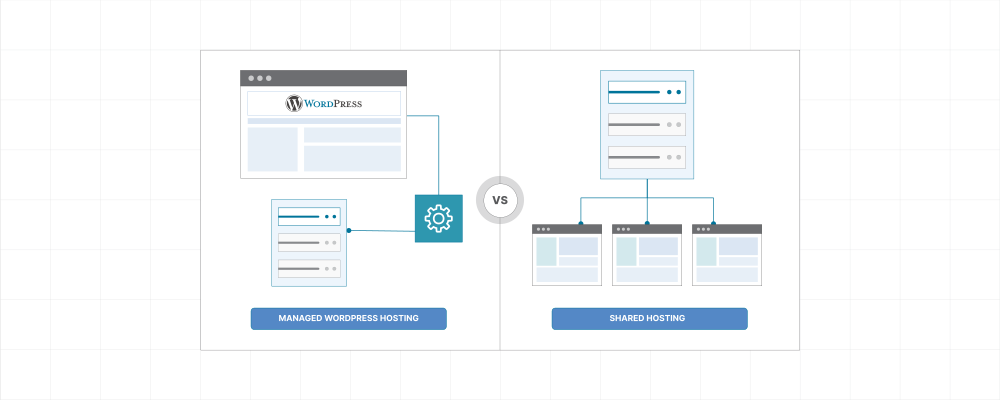

Are you struggling to choose the right hosting for your WordPress website? Managed WordPress hosting vs shared hosting offers two distinct solutions for different needs.
Managed WordPress hosting is a specialized premium service fully optimized for WordPress. It takes care of updates, security, performance optimization, and technical maintenance. Shared hosting places many websites on a single server, sharing resources. It offers low cost but comes with limited performance and control.
This article provides a detailed comparison of performance, security, cost, support, scalability, and more to help you make the best decision.
Key Takeaways
- Managed WordPress hosting delivers superior speed through WordPress-specific optimization, advanced caching, and CDN integration.
- Shared hosting risks performance drops during high traffic because resources are shared with other websites.
- Managed WordPress hosting provides stronger security with automatic updates, malware scanning, and expert monitoring.
- Shared hosting is ideal for beginners and very low-traffic sites where keeping costs low is the priority.
- Managed WordPress hosting is the better choice for business websites, e-commerce stores, and growing blogs that need reliability and expert support.
What Is Managed WordPress Hosting?
Managed WordPress hosting is a premium, WordPress-specific environment where the hosting provider fully manages the server architecture, optimization, security, and maintenance.
The server is configured and tuned exclusively for WordPress, often using faster storage (NVMe), advanced caching layers (Redis/Object Cache), and enterprise-grade security tools. This results in significantly better performance and reliability compared to standard shared hosting.
What Is Shared Hosting?
Shared hosting is the entry-level hosting plan where hundreds of websites share the same physical server and its resources (CPU, RAM, disk space, and bandwidth).
While it is the most affordable option, this shared environment creates the “noisy neighbor” effect, if one website on the server uses too many resources, every other site on that server can experience slower loading times, higher bounce rates, and even temporary downtime.
Key Differences Between Managed WordPress Hosting and Shared Hosting
Managed WordPress hosting vs shared hosting serve very different purposes, even though both can run WordPress websites. The biggest distinction lies in how much work the hosting provider handles versus how much responsibility falls on the user.
1. Server Optimization Managed WordPress hosting uses servers specifically optimized for WordPress with advanced caching solutions like Redis and LiteSpeed. Global CDNs are usually included for faster content delivery. Shared hosting uses general server setups with basic caching. Performance is affected by other sites sharing the server.
2. Speed & Performance Managed WordPress hosting consistently delivers fast load times through specialized optimization. Shared hosting speeds are slower and vary greatly, especially during traffic spikes.
3. Security Managed WordPress hosting offers proactive security with automatic malware scanning, WordPress-specific firewalls, and instant threat response. Shared hosting provides only basic security, leaving most responsibility to the user.
4. Automatic Updates Managed WordPress hosting automatically handles WordPress core, plugin, and theme updates safely. Shared hosting requires manual updates, increasing risk and time investment.
5. Backups Managed WordPress hosting provides daily automatic backups with easy one-click restore. Shared hosting offers limited or manual backups.
6. Support Quality Managed WordPress hosting gives access to WordPress specialists 24/7. Shared hosting offers general support that may not understand complex WordPress issues.
7. Scalability Managed WordPress hosting handles traffic growth and spikes more efficiently with automatic resource scaling. Shared hosting has strict limits and can throttle or crash during high traffic.
8. Control Panel Managed WordPress hosting often uses specialized dashboards optimized for WordPress management. Shared hosting typically uses standard cPanel or Plesk.
9. Cost Structure Managed WordPress hosting is more expensive but includes many premium features. Shared hosting is significantly cheaper, making it attractive for beginners.
10. E-commerce Suitability Managed WordPress hosting is excellent for WooCommerce stores with fast loading and strong security. Shared hosting often struggles with e-commerce due to speed and resource limitations.
11. Database Optimization Managed WordPress hosting includes automatic database query caching and regular optimization. Shared hosting leaves database tuning entirely to the user.
12. SSL Certificate Managed WordPress hosting offers free SSL with automatic renewal and easy setup. Shared hosting includes SSL but usually requires manual configuration.
13. Email Hosting Managed WordPress hosting provides reliable branded email with better deliverability. Shared hosting offers basic email that can be affected by server load.
14. Migration Support Managed WordPress hosting usually includes free professional migration services. Shared hosting rarely provides migration help.
15. Uptime Guarantee Managed WordPress hosting offers higher uptime guarantees (99.9%–99.99%) with strong redundancy. Shared hosting usually promises 99% uptime, which is less reliable in practice.
16. Long-term Value Managed WordPress hosting saves time, reduces risk, and supports growth better. Shared hosting saves money initially but can become costly in time and lost opportunities as the site grows.
Extra Considerations for WordPress Hosting Success
- CDN Integration — Managed WordPress hosting often includes global CDN setup for faster worldwide delivery.
- Plugin Management — Managed hosting tests and optimizes plugins for better compatibility and speed.
- Disaster Recovery — Managed plans offer faster and more reliable recovery options.
- Customer Support Speed — Managed WordPress hosting usually has much faster response times from WordPress experts.
When to Choose Managed WordPress Hosting
when:- Your website is for business, e-commerce, or professional use
- Speed and user experience directly affect your revenue
- You want strong security and reliability
- You prefer to focus on content and marketing rather than server management
When to Choose Shared Hosting
when:- You are a complete beginner or testing an idea
- Your website gets very low traffic (under 1,000–2,000 visitors/month)
- Budget is extremely tight
- You enjoy learning and managing technical tasks.
Summary
Managed WordPress hosting vs shared hosting comes down to your needs and goals. Managed WordPress hosting provides better performance, security, and convenience, making it the smarter choice for most serious WordPress websites in 2026. Shared hosting remains a good starting point for small, low-budget projects.
At Leanna Solutions, we offer both powerful managed WordPress hosting and affordable shared hosting plans to suit different stages of your website journey.
Ready to choose the right plan for your WordPress website?